
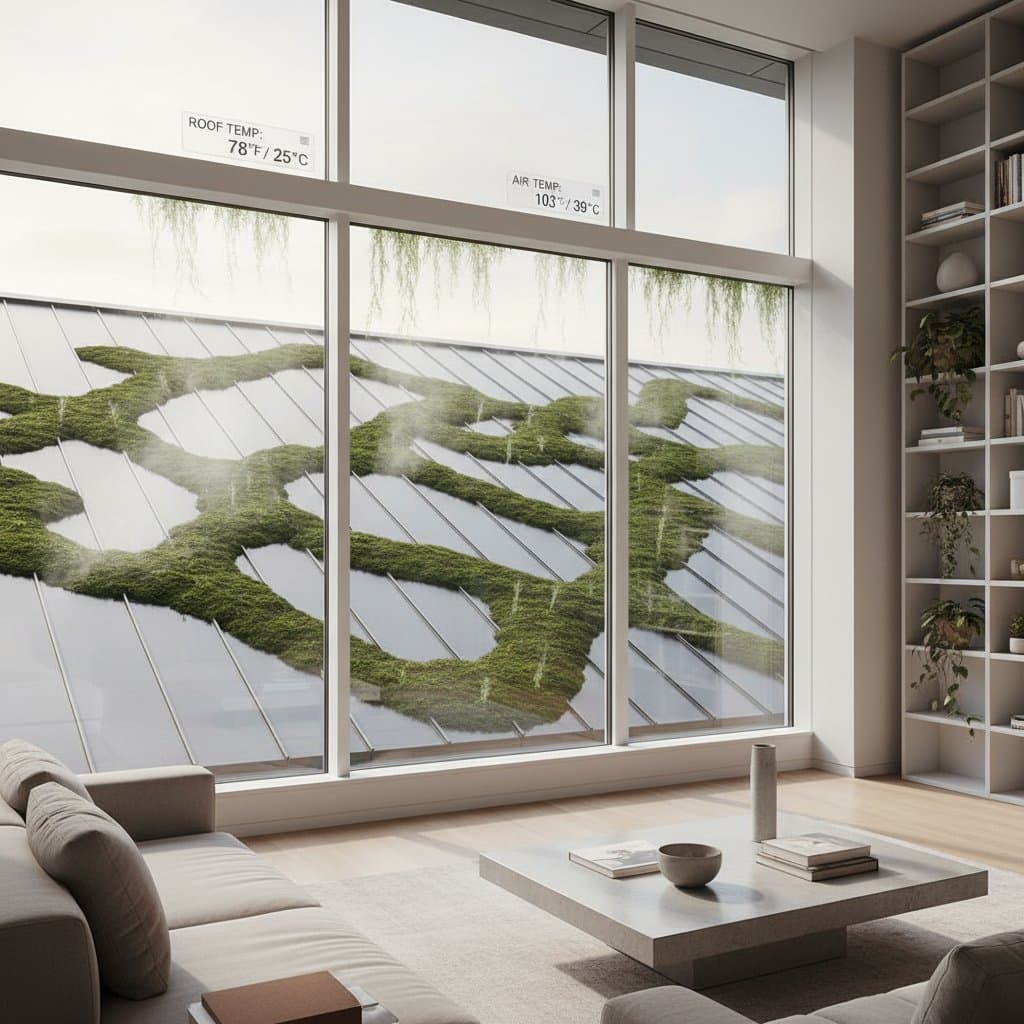
Bio-Integrated Metal Roofs with Living Algae Reduce Temperatures by 25 Degrees
Metal roofs often absorb intense heat under sunlight, raising indoor temperatures and increasing cooling expenses. Bio-integrated systems incorporate living algae to counteract this effect, lowering surface temperatures by up to 25 degrees Fahrenheit. These innovative roofs blend durability with biological cooling, offering homeowners and businesses a path to enhanced energy efficiency and sustainability.
This technology draws from natural processes like photosynthesis and evaporation. Property owners can explore its mechanics, advantages, and implementation to assess fit for their needs.
How Living Algae Roofs Function
Bio-integrated metal roofs feature modular panels that house microalgae in a controlled environment atop standard metal surfaces. The algae grow within sealed or semi-sealed units filled with water and nutrients, enabling photosynthesis that captures sunlight, absorbs carbon dioxide, and produces oxygen. This layer shades the metal, absorbs heat, and releases moisture through evaporation, mimicking plant transpiration on a compact scale.
Installation uses lightweight modules that integrate seamlessly with existing roofs. Maintenance remains straightforward, as the system self-regulates with minimal intervention.
The Science of the 25-Degree Temperature Reduction
Algae achieve cooling through dual mechanisms: shading that blocks direct solar radiation and evaporative cooling from water release during growth. Under peak sunlight, untreated metal roofs can exceed 150 degrees Fahrenheit, while algae-covered versions stabilize below 125 degrees, reducing heat transfer to interiors.
This process lowers air conditioning demands by 20 to 30 percent in moderate climates. Field tests confirm consistent performance across various weather conditions.
Key Environmental and Economic Benefits
Algae roofs sequester carbon dioxide at rates of up to 10 kilograms per square meter annually, improving local air quality and offsetting emissions. They also cut energy use for cooling, which accounts for nearly 20 percent of typical household electricity consumption.
Over a decade, owners report savings of $500 to $1,500 yearly on utility bills. Incentives from green building programs further enhance returns through rebates and tax credits.
Assessing Suitability for Your Property
Evaluate your roof's pitch, material, and load capacity before proceeding; metal substrates provide the ideal base due to their strength and longevity. Algae systems suit both sloped and flat designs, though flat roofs benefit from integrated drainage to manage excess moisture.
Consider local climate: optimal growth occurs in areas with 4 to 6 hours of daily sunlight and moderate humidity. In arid zones, install automated misting; in cold regions, add thermal barriers. Consult certified installers for site-specific assessments.
Step-by-Step Installation Guide
Begin with a professional inspection to verify roof integrity and clean surfaces. Installers then secure modular algae panels using clips or adhesives compatible with metal.
Connect the system to a low-voltage pump for nutrient and water circulation, calibrated to local conditions. Full setup typically completes in one to two days for a standard home, followed by a growth monitoring period of two weeks.
Ongoing Maintenance Practices
Algae systems require quarterly checks for water levels and debris removal to sustain efficiency. Automated sensors in advanced models alert owners to adjustments in nutrients or pH balance.
Harvest excess biomass annually to refresh the culture, a process that takes under an hour and boosts cooling output. Professional servicing every two years ensures longevity beyond 20 years.
Cost Analysis and Return on Investment
Initial costs range from $15 to $25 per square foot, higher than conventional metal roofs at $10 to $15. Factors include panel complexity and site preparation.
Savings accrue through 25 percent lower cooling costs and reduced repairs, yielding payback in 5 to 7 years. Pair with energy audits to maximize rebates from programs like LEED certification.
Comparing Algae Roofs to Alternatives
Reflective white roofs reduce heat by 15 to 20 degrees via sunlight deflection but lack active cooling. Green roofs offer evapotranspiration similar to algae but demand heavier soil loads and more upkeep.
Algae systems provide a balanced option: lighter than green roofs, more effective than reflectives, and adaptable to retrofits without major structural changes.
Aesthetic and Integration Considerations
Algae impart a subtle green or blue-green hue, evolving with seasons for a natural appearance. Select strains for uniform color if visibility matters, or prioritize high-performance varieties for function.
Integrate with solar arrays by mounting panels beneath to shield them from heat, increasing output by 10 percent. Use harvested water for landscaping to close the sustainability loop.
Resolving Common Concerns
Sealed modules prevent odors, pests, or leaks, as algae remain contained without roof contact. Strains engineered for resilience perform in low-light conditions, maintaining 80 percent efficiency on cloudy days.
Durability matches standard metal roofs, with warranties covering 25 years against biological failure.
Broader Implications for Urban Sustainability
Widespread adoption could mitigate urban heat islands by 2 to 4 degrees citywide, fostering cooler microclimates. Cumulative carbon capture from thousands of installations supports emission reduction goals.
Early adopters in commercial settings note enhanced property values and community appeal.
Steps to Adopt a Living Algae Roof
Start by researching certified providers through industry associations. Request quotes based on your roof size and location, then review case studies for performance data.
Secure financing via green loans if needed, and plan installation during mild weather. Track post-installation metrics like energy bills to quantify benefits and refine your sustainable setup.