
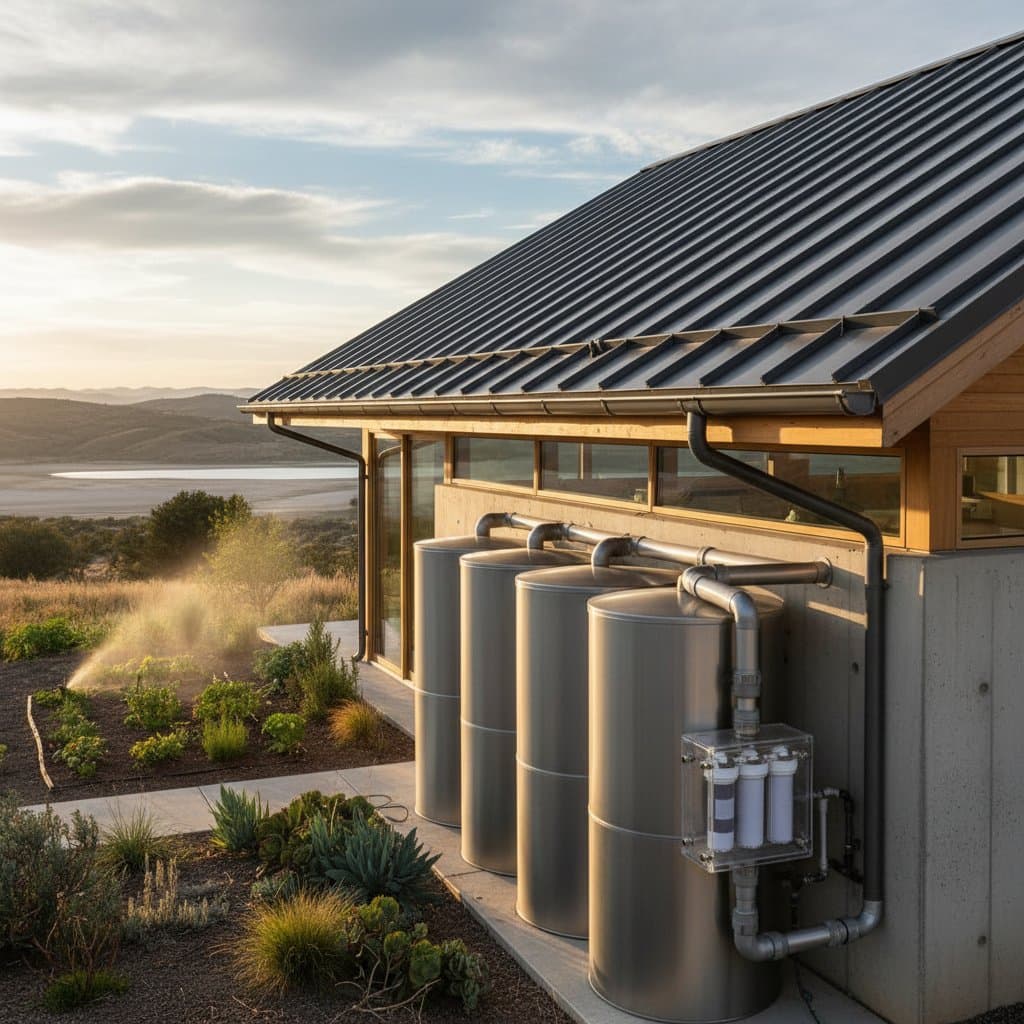
Metal Roofs for Rainwater Harvesting and Drought Resilience
Water scarcity affects many regions as climate patterns shift. Homeowners face increasing challenges with unreliable rainfall and escalating water costs. Metal roofs provide an effective solution by capturing rainwater, transforming a natural resource into a reliable supply for household needs.
This article details the advantages of metal roofs for rainwater collection. It covers essential steps for system design, installation, and maintenance. Readers gain practical guidance to achieve water independence and reduce reliance on municipal sources.
Advantages of Metal Roofs in Rainwater Systems
Metal roofs excel in rainwater harvesting due to their durable, non-porous surfaces. Unlike asphalt shingles, which absorb water and release contaminants, metal surfaces allow clean runoff. This feature minimizes pollution in collected water and extends the lifespan of storage components.
These roofs withstand harsh weather, ensuring consistent performance over decades. Their sleek design facilitates smooth water flow into gutters, maximizing collection efficiency. Homeowners benefit from lower long-term maintenance compared to other roofing materials.
Installation on new or existing structures proves straightforward. Professional roofers integrate collection features during replacement, often at minimal additional cost. This upgrade positions properties for sustainability in drought-vulnerable areas.
Estimating Water Collection Potential
Determine the volume of harvestable water to guide system planning. Begin by measuring the roof's surface area in square meters. Obtain average annual rainfall data from local meteorological records for your area.
Apply a collection efficiency factor of 0.85 to 0.95, accounting for losses from evaporation and initial dirty runoff. The formula yields an estimate: roof area multiplied by annual rainfall multiplied by efficiency factor equals total liters per year.
Consider a 150-square-meter roof in a region receiving 800 millimeters of rain annually. With 0.9 efficiency, the system captures approximately 108,000 liters yearly. This volume supports irrigation, laundry, and toilet flushing, offsetting significant utility expenses.
Adjust calculations for roof pitch and orientation, as steeper angles enhance flow. Seasonal variations require buffer storage to cover dry periods. These estimates inform tank sizing and investment decisions.
Designing Gutters and Downspouts for Optimal Flow
Effective gutters channel water from the roof to storage without overflow or waste. Select seamless aluminum or galvanized steel gutters to match metal roofing durability. Size them at least 5 inches wide to handle heavy rains.
Install gutters with a slight slope, one-quarter inch per 10 feet, toward downspouts. Position downspouts at corners and valleys to direct flow efficiently. Leaf guards prevent debris buildup, maintaining clear paths for water.
Connect downspouts to underground pipes if space allows, reducing surface clutter. Ensure all joints seal tightly to avoid leaks. A well-designed gutter system captures up to 90 percent of roof runoff, essential for drought preparedness.
Incorporating First-Flush Diversion
Initial rainwater flushes accumulated roof debris, including bird droppings and pollutants. A first-flush diverter redirects this contaminated portion away from storage tanks. Devices typically hold 10 to 20 liters, discharging automatically after the flush.
Attach the diverter inline with the downspout using simple PVC fittings. Choose models with manual or gravity-reset mechanisms for ease of use. In urban areas with higher pollution, extend the flush volume to improve water purity.
This component extends filter life and enhances storage quality. Regular inspection ensures proper function, especially after storms. Homeowners report clearer water and reduced treatment needs with consistent diverter use.
Selecting Filtration and Treatment Methods
Collected rainwater requires purification for safe application. Basic sediment filters remove larger particles, suitable for outdoor uses like gardening. Install these at tank inlets to protect downstream components.
For indoor non-potable needs, such as laundry or toilet flushing, add activated carbon filters to eliminate odors and chemicals. Multi-stage systems combine mesh screens, carbon blocks, and ceramic elements for comprehensive cleaning.
Potable use demands advanced treatment, including ultraviolet disinfection to kill bacteria and viruses. Consult local health guidelines before implementing drinking water systems. Professional installation guarantees compliance and reliability.
Monitor water quality periodically with test kits. Adjust filtration based on roof exposure and rainfall patterns. Proper treatment transforms harvested rain into a versatile household asset.
Choosing and Installing Storage Tanks
Storage tanks hold captured water for distribution during dry spells. Polyethylene tanks resist corrosion and suit above-ground placement near the home. Select capacities from 1,000 to 10,000 liters based on collection estimates and space.
Underground options conserve yard area and protect against freezing. Ensure tanks feature overflow valves and screened vents to prevent contamination. Position them on level, stable foundations to avoid settling issues.
Connect tanks to pumps for pressure delivery to faucets or irrigation lines. Insulate in cold climates to maintain usability. Scalable tank arrays allow gradual expansion as needs evolve.
Maintenance Practices for Long-Term Reliability
Regular upkeep sustains system efficiency and water safety. Inspect gutters quarterly, clearing leaves and debris to ensure free flow. Check downspouts and diverters after major rain events for blockages or damage.
Clean filters according to manufacturer schedules, typically every three to six months. Test stored water annually for pH and contaminants. Winterize systems by draining lines to prevent pipe bursts.
Address roof repairs promptly to avoid leaks into the collection area. Document maintenance logs to track performance and identify issues early. Diligent care extends system life beyond 20 years, maximizing return on investment.
Integrating with Broader Conservation Efforts
Rainwater harvesting complements other water-saving measures for comprehensive resilience. Retrofit fixtures with low-flow aerators and showerheads to reduce indoor consumption by up to 50 percent. Harvested water pairs ideally with these for peak efficiency.
Landscape with native, drought-resistant plants that thrive on minimal irrigation. Drip systems deliver stored rainwater precisely to roots, minimizing evaporation. Educate household members on conservation to foster mindful usage.
Community involvement amplifies benefits. Share systems in neighborhoods to ease collective pressure on water infrastructure. This holistic approach builds household and regional drought tolerance.
Expanding the System for Future Needs
Start with core components and scale as requirements grow. Add modular tanks to increase capacity without major redesign. Integrate smart sensors for real-time monitoring of levels and quality via mobile apps.
Extend piping to new garden zones or indoor outlets. Upgrade filtration for potable expansion if regulations permit. Budget for phased improvements to align with family changes or climate forecasts.
Consult certified installers for expansions to ensure code compliance. Document upgrades for property value enhancement. Forward-thinking design secures water access amid uncertain weather.
Building Water Security Through Rainwater Harvesting
Metal roofs enable proactive drought management by capturing free, abundant rain. Systems deliver cost savings, environmental gains, and peace of mind. Implementation requires planning but yields enduring rewards.
Homeowners achieve self-sufficiency, supporting daily needs without external dependence. Each rainfall contributes to sustainability, easing burdens on shared resources. Begin the process today to fortify your home against water challenges.