
Hurricane Debris Rules That Can Leave Piles Uncollected
After a hurricane, debris can make a familiar yard or street feel difficult to navigate. Broken branches, damaged fencing, soggy insulation, and household items may all need attention. Local pickup programs often have specific rules for how materials must be sorted and placed. A missed instruction can leave a pile behind or create safety problems for neighbors and crews.
Cleanup requirements differ by community. Local officials may update collection instructions as conditions change. Treat any broad guidance as a starting point, not a substitute for your city, county, or waste hauler's directions. A simple plan helps you protect your household, avoid preventable delays, and clear your property in manageable stages.
Confirm Local Instructions Before Moving Debris
The first useful step is finding out what your local program will collect. Rules may cover accepted materials, pile size, placement, collection areas, and the separation of vegetative debris from construction waste. Materials accepted at a drop-off site may not be eligible for curbside pickup.
Check official notices from your local government or waste provider. Look for instructions specific to storm cleanup, since normal collection rules might not apply. If information is unclear, contact the relevant office before moving a large pile to the curb.
Pay attention to these details:
- Which debris types are accepted for pickup
- Whether household trash needs separate bags or containers
- Where piles should be placed and how far they must stay from hazards
- Whether collection requires registration, a request, or a scheduled inspection
- What the community says about private contractors and disposal receipts
Keep a screenshot, printed notice, or written note of the instructions. A family member can use it to check sorting as cleanup progresses. If you live in a rental, condominium, or neighborhood with shared property, ask the property manager or association what areas and services are covered. Avoid putting debris in a street, drainage channel, or public space unless local directions specifically allow it.
Sort Materials Before Building a Pile
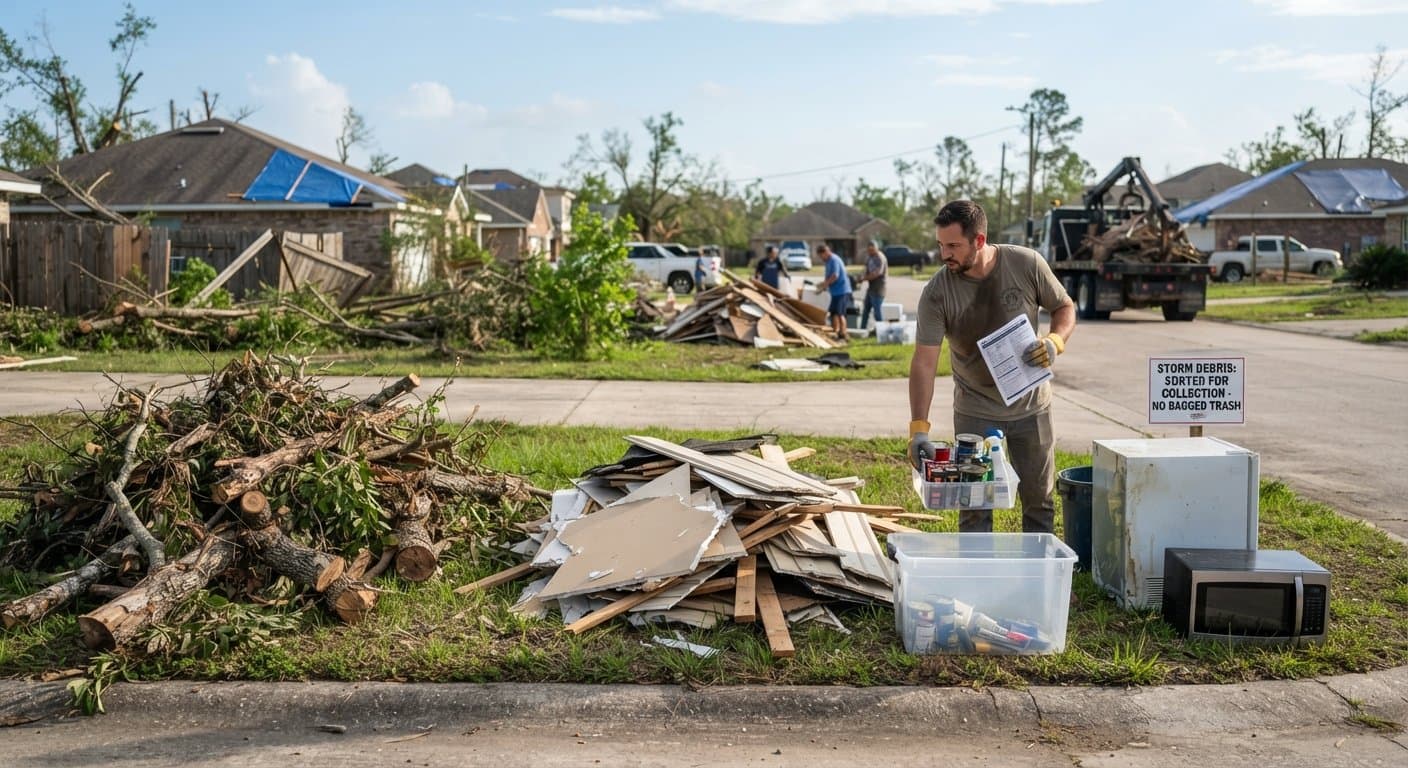
Sorting debris at the start can save substantial time later. Crews may use different vehicles for branches, appliances, and building materials, so mixed piles can be harder to collect. Separating items also helps you spot anything that needs special handling.
Create clear categories in a safe area of your property. Common groups include branches and leaves, building materials, appliances, electronics, and ordinary household waste. Keep containers closed where possible, and do not mix hazardous materials such as fuel, paint, pesticides, or batteries with general debris.
For example, a damaged fence could produce wood, metal hardware, and a small amount of concrete. Keep those materials apart rather than piling them together. If you are unsure whether an item belongs in a special collection, set it aside and check local instructions.
Mark temporary sorting areas with simple labels, such as "branches" or "building material." Use boxes or bins you already have, but do not rely on containers that a collection crew may mistake for trash. Keep children and pets away from debris, especially where nails, broken glass, or unstable objects may be hidden.
Put Piles in the Right Place
A neatly sorted pile can still be missed if it blocks a sidewalk, driveway, utility access, or drainage path. Local programs often specify where material should go and how far it must remain from roads, trees, mailboxes, and other objects. Those placement rules give collection vehicles room to work and keep routes safer.
Before you move anything, identify the approved collection area. Keep debris on your property unless official directions say otherwise. Do not place branches or bags beneath overhead wires, against utility equipment, near fire hydrants, or across a storm drain. In flood-prone areas, keeping drains clear is especially important because blocked water routes can make standing water worse.
If your property is small, ask the local program how to handle limited curb space. In some neighborhoods, a designated drop-off location or staged pickup may be available. Avoid moving heavy debris more than necessary. A clear path from the damaged area to the sorting spot can reduce lifting and prevent trips.
Take a quick look from the street before you finish. Make sure the pile is visible, separated as required, and not creating a hazard for pedestrians or drivers. If the collection instructions call for specific placement, follow those details rather than copying a neighbor's setup.
Handle Hazardous and Damaged Items Carefully
Storm damage can expose hazards that are not obvious at first glance. Downed electrical lines, leaking fuel, damaged gas connections, broken glass, sharp metal, and unstable walls all call for caution. Do not approach a fallen wire or touch anything that may be energized. Contact the appropriate utility or emergency service and wait for qualified personnel.
Wear sturdy, closed-toe shoes, work gloves, and eye protection when dealing with ordinary debris. Use a mask when dust or mold may be present, and avoid disturbing materials you cannot identify. Wet building products can be heavy, and damaged structures may shift without warning. If a roof, ceiling, tree, or wall looks unstable, keep clear and seek qualified help.
Set aside items that local rules treat as household hazardous waste. These can include fuel containers, chemicals, batteries, and some electronic equipment. Never pour chemicals into a drain, onto the ground, or into ordinary trash. Keep products in their original containers when safe to do so, and follow official guidance for storage and disposal.
For appliances or containers that may hold refrigerants, fuel, or other regulated materials, do not cut, puncture, or dismantle them. Ask the local waste provider how these items are collected. A careful pause is safer than a rushed attempt to make an item fit into a debris pile.
Protect Your Claim and Keep Useful Records
Cleanup may overlap with insurance inspections, landlord responsibilities, or repair work. Before discarding damaged belongings, take clear photographs and make a basic inventory. Capture damage from several angles, and record the location of each item. Save receipts for emergency repairs, temporary protection, and authorized disposal.
When conditions are safe, document the property before moving large items. Do not delay urgent safety measures to take pictures, though. If a damaged roof is allowing water inside, for instance, protect the area as soon as you can do so safely, then keep a record of the work and costs.
Check your policy or contact your insurer to learn what documentation is needed. Keep copies of communications and any contractor agreements. If local collection rules require you to arrange disposal yourself, ask how to document the service and where materials will go. Avoid paying someone who makes broad promises about pickup without explaining the work, disposal destination, and costs.
If you rent, notify the property owner or manager promptly and keep a written record of the report. Avoid throwing away property that may belong to someone else until you receive instructions, unless it presents an immediate health or safety risk. Clear records can make later conversations more straightforward.
Choose Cleanup Help With Care
Professional help can be useful when a tree is large, a structure is unstable, or heavy materials exceed your ability to move safely. The lowest quote is not automatically the best choice. Ask what the service includes, who is responsible for hauling, and whether disposal fees are separate.
Before work begins, get the scope and price in writing. Confirm that the contractor will follow local debris requirements and use an appropriate disposal site. Be cautious if someone demands full payment upfront, pressures you to decide immediately, or cannot provide clear business details. After a major storm, unsolicited offers may arrive before you have had time to compare options.
For tree work near power lines, buildings, or public roads, contact the utility or local authorities before hiring anyone to approach the hazard. Do not climb a damaged tree or use a chainsaw if you lack training and the right protective equipment. A small branch on the ground is very different from a split limb hanging above a roof.
If neighbors are also arranging help, compare information and check references through reliable local channels. A written agreement, a clear work area, and an agreed disposal plan help prevent confusion once the crew arrives.
Use a Staged Cleanup Checklist
Trying to clear everything at once can lead to fatigue and mistakes. A staged checklist turns a daunting job into smaller tasks and helps everyone in the household understand what comes next.
Start with safety, then move through these steps:
- Check for hazards and keep people away from unsafe areas.
- Review local collection notices and note any special requirements.
- Photograph damage and save relevant receipts or messages.
- Sort debris into approved categories.
- Move accepted materials to the designated collection area.
- Set aside hazardous items for the proper disposal program.
- Recheck access routes, sidewalks, drains, and utility areas.
- Track what has been collected and follow up on missed material.
Keep the checklist where household members can see it. Assign manageable tasks, such as sorting gloves and tools or recording damaged belongings. Do not ask children to handle debris. Take breaks, drink water, and stop if weather or physical conditions make the work unsafe.
Making Cleanup More Manageable
A clear plan reduces repeated lifting, missed pickups, and unnecessary disposal costs. Confirm your local instructions, sort materials as you go, protect people from hidden hazards, and keep useful records. These practical steps can make storm debris removal safer and easier, whether you are handling a few fallen branches or coordinating a larger repair.
Cleanup can take patience, especially when collection schedules and local requirements change. Work in sensible stages, ask for guidance when an item or rule is unclear, and leave dangerous jobs to qualified crews. A careful approach helps your home and neighborhood recover with fewer surprises.