
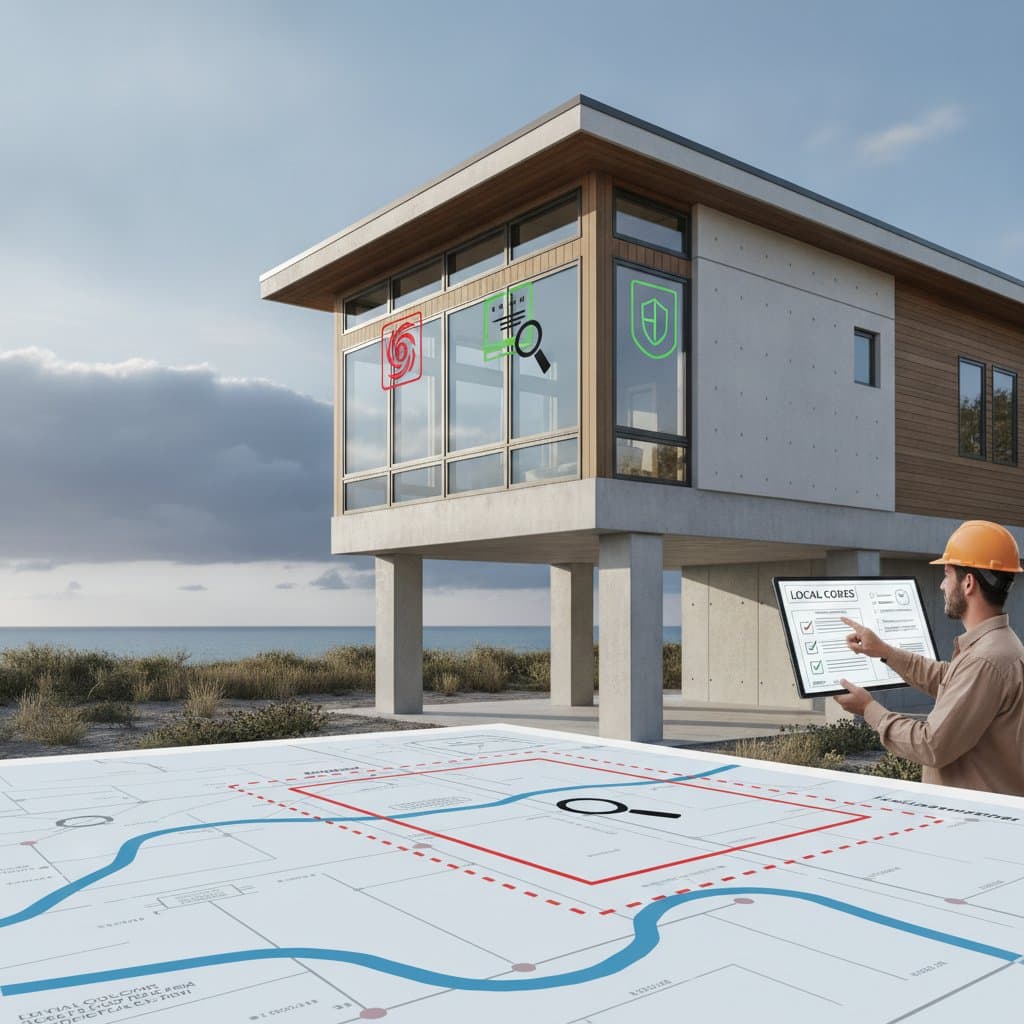
Understanding FEMA Flood Zone Requirements for Window Replacement
Property owners in flood zones often assume federal rules mandate impact windows for every home. This assumption creates unnecessary costs and delays. FEMA maps identify flood risk, but local building departments establish the actual construction requirements that apply to window replacement projects.
A single federal mandate requiring impact windows across all flood zones does not exist. Coastal high hazard areas and regions with windborne debris requirements may need impact rated glass, approved shutters, or other tested opening protection systems. Property location, elevation, and project scope determine which standards apply.
Immediate Verification Steps
Start with these essential checks before ordering materials or scheduling work.
- Confirm your flood zone designation through the local floodplain office or federal flood map service. Note the specific zone classification, base flood elevation, and whether the property falls within a coastal high hazard area.
- Contact the building department directly to request current opening protection requirements for your address and planned scope of work. Ask whether impact glass, shutters, or alternative tested assemblies satisfy code requirements.
- Examine product labels for recognized testing marks, approval numbers, design pressure ratings, and approved installation methods before purchase.
- Locate elevation certificates, surveys, prior permits, and renovation records that clarify building height and flood exposure levels.
Determining Opening Protection Requirements
Properties in coastal high hazard areas or designated windborne debris regions require careful review of opening protection standards. Outside these zones, confirm specific requirements before investing in impact windows, since shutters or other approved systems may meet code.
- Gather the property address, parcel number, flood map panel details, existing window specifications, and planned work scope.
- Consult the local floodplain administrator and building official to identify applicable code editions and product approval standards.
- Request written documentation specifying design pressure requirements, impact testing standards, attachment specifications, and permit documentation needs.
- Engage a licensed designer or engineer if map data, code requirements, or elevation information present conflicts.
Local building officials emphasize that address and project scope determine requirements. Site specific determinations replace general online claims.
Prioritizing Repairs and Documentation
Address functional issues before cosmetic improvements. Repair or replace windows that show damage, leaks, or safety concerns. When windows operate properly, focus on documentation and listing quality rather than immediate upgrades.
Complete these preparatory steps:
- Inspect frames, seals, locks, screens, stucco joints, and interior trim conditions.
- Address active leaks, unsafe glass, failed locks, and visible water damage before improving weather sealing where permitted.
- Verify smooth operation, dry interiors after rainfall, secure locks, and matching records for permitted work.
- Engage licensed window contractors for failed assemblies, structural opening concerns, or permit questions.
Real estate professionals in coastal markets report that buyers value compliance documentation equally with new installations. Maintain permits, approvals, invoices, warranties, and inspection records together.
Managing Incentives and Insurance Requirements
Apply incentives only when total costs remain capped and benefits are clearly defined. Closing cost credits may reduce buyer friction, while open ended replacement promises can create liability exposure.
Structure incentive arrangements through these steps:
- Verify permitted credit types with lenders and closing professionals.
- Compare price adjustments, closing credits, repairs, or completed installations. Specify amounts, deadlines, product standards, and responsible parties.
- Confirm acceptance by buyers, lenders, insurers, and building departments.
- Document repair credits rather than promising future code compliance work.
Insurance discounts require specific certification, inspection, or receipt documentation from carriers. Request these requirements directly from your insurance professional.
Property Presentation and Listing Accuracy
Present properties through verifiable location benefits and operational details rather than assumptions about potential buyers. List travel access, parks, public services, flood resources, utility costs, and storm preparation facilities.
Connect features to practical applications, such as proximity to waterfront access or nearby evacuation resources. Verify all distances, fees, service boundaries, and flood statements before publication.
Complete listings include room descriptions, usable measurements, permit information, required flood zone disclosures, window certifications, utility details, and showing instructions. Upload accurate images without relying on photographs to demonstrate compliance.
Regional Variations and Professional Consultation
Requirements vary by municipality, property age, construction type, elevation, and storm exposure. Detached homes, condominiums, manufactured homes, and historic properties follow different compliance paths. Seasonal factors affect contractor availability and inspection scheduling.
Contact local building departments regarding permits, regional wind maps, floodplain rules, and accepted products before ordering materials. Professional consultation prevents costly delays and ensures compliance with current standards.
Working with Licensed Contractors
Licensed professionals understand local code interpretations and permit processes. They maintain relationships with building departments and stay current with product approval requirements. This expertise reduces project timeline risks and ensures installations meet all applicable standards.
Contractor selection should prioritize documented experience with flood zone properties and current knowledge of opening protection requirements. Request references from recent projects in similar flood zones and construction types.