
How Impact Doors May Lower Home Insurance Costs
Insurance premiums can feel difficult to predict, especially for homeowners in coastal and storm prone areas. Stronger doors may help protect a home from wind damage, and that protection can sometimes qualify for an insurance discount. Still, savings are not automatic. Insurers use their own rules, and the door's approval, installation, and documentation all matter.
If you are considering an upgrade, focus on two goals: improving the home's protection and confirming how your insurer evaluates wind mitigation features. A little preparation can help you avoid an expensive purchase that does not earn a credit.
Understand What Impact Doors Do
Impact doors are built and tested to resist damage from flying debris and strong wind pressure. Many use reinforced frames, sturdy hardware, and laminated glass that stays bonded when cracked. That can help keep an opening protected during severe weather.
A damaged exterior opening can let wind and rain enter, increasing pressure inside the home and raising the risk of roof or interior damage. A properly rated door can reduce that vulnerability. Before shopping, identify which exterior doors need attention, including entry doors, patio doors, and doors leading to a garage. Ask a licensed contractor or building official which products meet local code for your location.
Ask Your Insurer About the Credit First
An insurance discount for impact doors depends on the company, policy, and local regulations. Some insurers may recognize certified impact protection as part of a broader wind mitigation review. Others may require specific testing labels, permits, or a professional inspection before adjusting a premium.
Call your insurer before placing an order. Ask whether the company offers a wind mitigation credit for impact rated doors, what product standards it accepts, and whether every exterior opening must qualify. Find out if the credit applies to the whole home or only to a portion of the wind coverage premium. Request the answers in writing, so you can compare them with the contractor's proposal.
Check the Product Rating and Paperwork
A product described as storm resistant is not necessarily eligible for an insurance discount. Insurers typically need proof that the door meets recognized testing or code requirements for the home's wind exposure. Labels, product approvals, and installation records can help verify that claim.
Before buying, collect the manufacturer's specifications and approval documents. Confirm the exact model, glass type, frame, and hardware, since a small substitution can change a product's rating. Keep receipts, permits, inspection reports, and photographs of the finished installation. Store digital copies in a folder you can find quickly. Clear records make it easier to request a review and show that the installed door matches the approved product.
Get a Wind Mitigation Inspection
A wind mitigation inspection documents protective features throughout a home. Depending on local rules and the insurer's process, the report may cover roof connections, roof shape, coverings, shutters, and exterior openings. Impact doors could contribute to the home's overall assessment, but the inspector needs to verify them.
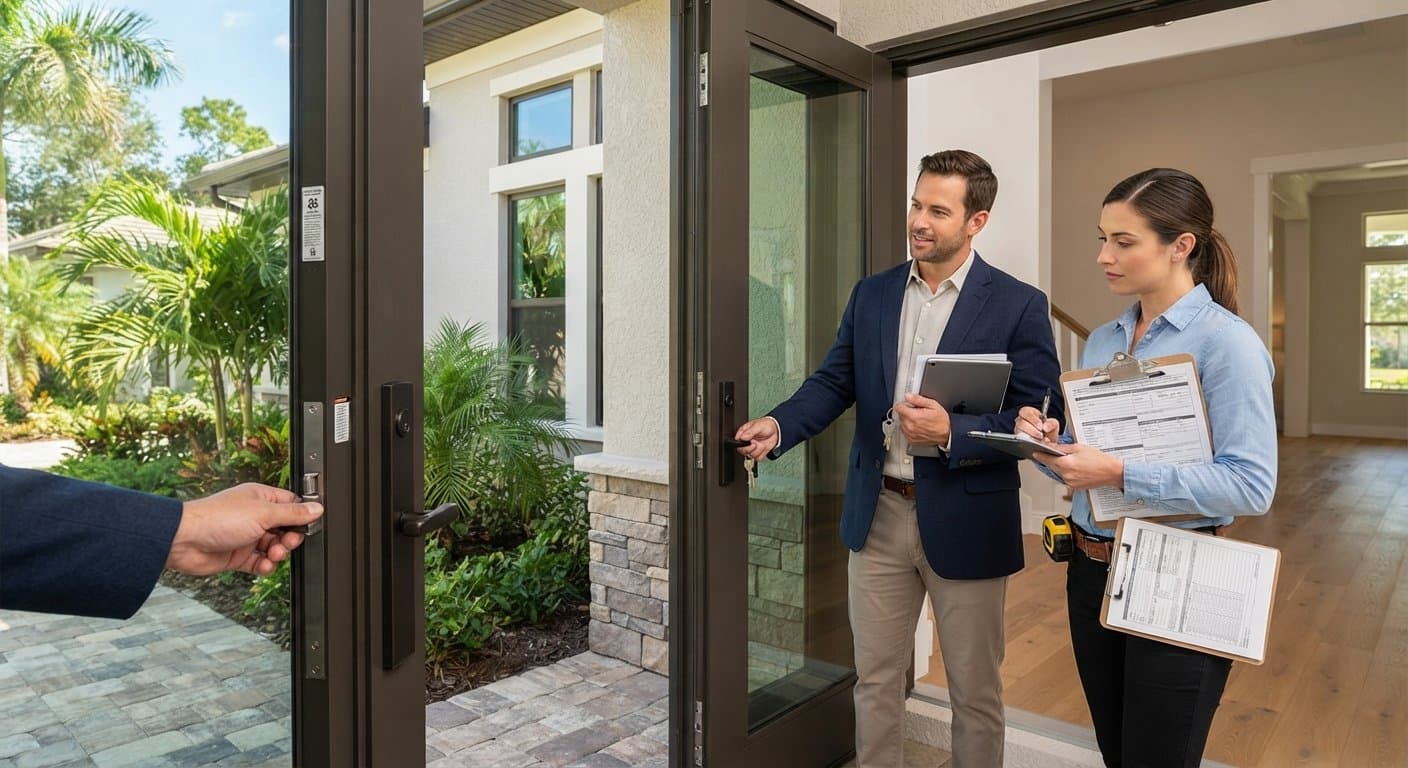
Ask your insurer whether it requires a specific inspection form or a qualified inspector. Schedule the inspection after installation, and make sure the inspector can see product labels and paperwork. If the doors are hidden behind trim or screens, provide photos from the installation. A complete report gives the insurer a clearer basis for deciding whether a 2026 wind mitigation credit applies.
Compare Real Savings With Project Costs
Impact doors can be a valuable safety upgrade, but do not assume the insurance discount will cover the project. The amount can differ widely, and premiums may change for reasons unrelated to the doors. Compare written estimates for materials, labor, permits, and any framing repairs with the potential savings your insurer confirms.
Use a simple calculation: divide the project cost by the expected annual premium savings to estimate how long it could take for the discount to offset the expense. Treat that as one factor, not the only reason to upgrade. Better weather protection, fewer drafts, added security, and improved comfort may also matter to your household. If the savings are small, consider replacing the most exposed or worn doors first, while confirming whether partial upgrades qualify.
Avoid Common Installation Mistakes
Even a high rated door can underperform if it is installed incorrectly or paired with an unsuitable frame. Gaps, weak fasteners, or damage around the opening can compromise protection and may create problems during inspection. A bargain product without verifiable approval can also leave you with no credit.
Choose an insured contractor who understands local wind requirements and can provide references, permits, and a detailed scope of work. The proposal should identify each door and its rating, explain any needed frame work, and state who will arrange inspections. After installation, check that locks and hinges work smoothly, and keep the paperwork together. Do not assume a sales claim guarantees an insurance discount. Get the insurer's eligibility criteria before committing.
Make the Upgrade Work for Your Home
Impact doors can support both storm readiness and a possible insurance discount, but the best results come from planning. Confirm your insurer's rules, choose a documented product, arrange proper installation, and keep records for the wind mitigation review. These simple steps help you make an informed decision, reduce the chance of surprises, and choose improvements that fit your home and budget.