
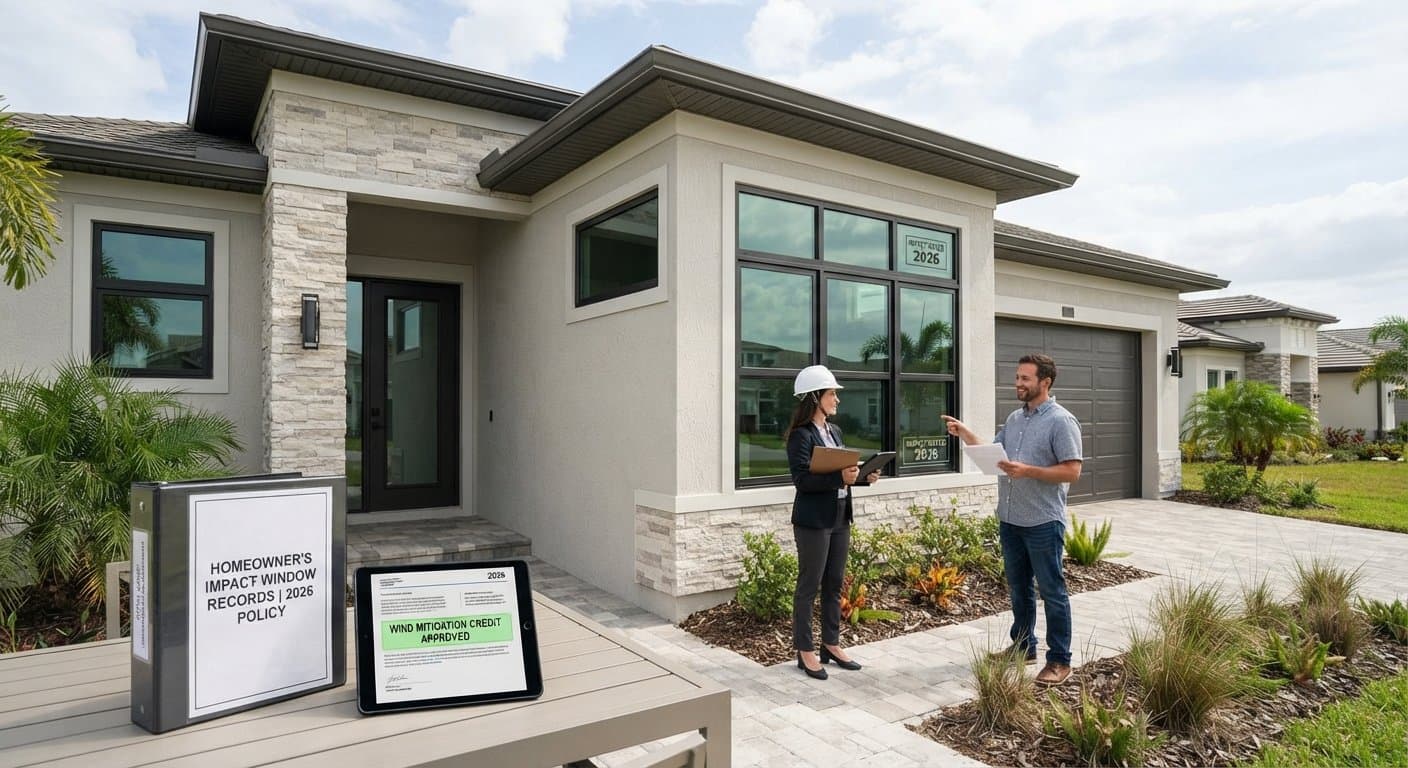
Impact Windows and Hurricane Insurance Credits
Impact windows can reduce hurricane insurance premiums, but the actual savings depend on your specific policy, property location, and documentation quality. Homeowners in wind-exposed regions often discover that qualifying for credits requires more than simply choosing products labeled as impact resistant. The key lies in understanding exactly what your insurer requires before committing to a replacement project.
Initial Policy Review
Start by examining your declarations page to identify windstorm coverage details and deductible amounts. This document reveals which portions of your policy may be affected by mitigation improvements. Next, contact your insurer directly to request written guidelines on acceptable window ratings and required inspection documentation. Requirements vary significantly between states and insurance companies, making this step essential for accurate planning.
Gather all existing product documentation including labels, invoices, permits, and installation records. Complete records allow inspectors to verify protection levels without requiring additional verification steps. Check every opening in your home, including doors, skylights, and garage doors, since one unprotected opening can prevent qualification for whole-home credits.
Wind Mitigation Inspection Process
Schedule a professional wind mitigation inspection to document features that may qualify for premium reductions. The resulting report provides detailed information about your home's current protection level and identifies specific improvements needed. Ask your insurer how long they accept inspection reports, as validity periods differ between companies.
Request written confirmation of the policy's wind mitigation criteria before beginning any work. This documentation should specify which window ratings and installation standards the insurer accepts. Compare multiple contractor estimates that include permits, disposal fees, and installation details to understand the full project scope.
Documentation Requirements
Maintain detailed records throughout the installation process. Request product approval documentation, permit records, and itemized invoices from your installer. Photograph labels on all products before and after installation to create visual verification of the work completed.
Schedule required inspections immediately after installation completion. Submit inspection reports to your insurer along with all supporting documentation, then request written confirmation that your policy reflects the verified improvements. This confirmation serves as proof of your mitigation efforts for future reference.
Common Qualification Mistakes
Many homeowners assume that impact-rated glass alone guarantees insurance discounts. In reality, credits depend on inspection findings and policy-specific requirements rather than product descriptions alone. Avoid relying on contractor estimates of potential savings, since these projections often exceed actual insurer calculations.
Consider that roof connections, door protection, garage openings, and roof configuration also influence mitigation assessments. Upgrading windows while leaving other openings unprotected may limit your credit eligibility. Ask inspectors to identify any remaining unprotected openings that could affect your overall qualification status.
Regional and Property Considerations
Insurance credits and building requirements vary by state, county, and individual insurer policies. Review local building department standards alongside your insurance requirements before selecting products. Factors such as coastal exposure, home age, window dimensions, and installation quality all influence credit eligibility.
Condo owners should verify association rules regarding exterior modifications and determine responsibility for window replacements. Older homes may require special consideration for how new window frames integrate with existing stucco or siding materials. Plan installation timing around seasonal contractor availability and local weather patterns.
Alternative Protection Options
Compare impact window costs against other protection methods such as shutters or removable panels. Some insurers accept multiple protection types, potentially offering more cost-effective solutions for certain properties. Request specific information about which alternatives qualify for equivalent credits.
Evaluate whether partial protection provides meaningful savings compared to comprehensive upgrades. Some policies offer graduated credits based on the percentage of protected openings, allowing homeowners to prioritize the most critical areas first.
Final Verification Steps
After completing installation and inspections, verify that your revised premium reflects the expected credits. Keep all confirmation documents in a secure location for future reference during policy renewals or property sales. Review your policy annually to ensure continued credit application.
Ongoing Policy Management
Maintain current documentation as building codes and insurance requirements evolve over time. Reassess your mitigation status when making other home improvements that might affect wind resistance. Stay informed about changes in your insurer's credit policies that could impact your coverage costs.